
“Bu sitenin amacı, bir beyin cerrahı perspektifinden, nereye gidileceğini seçmek için seyahat ve keşif konusunda tutkulu yetişkin bireylere yardımcı olmaktır."
25 Questions you should ask about Northern Lights





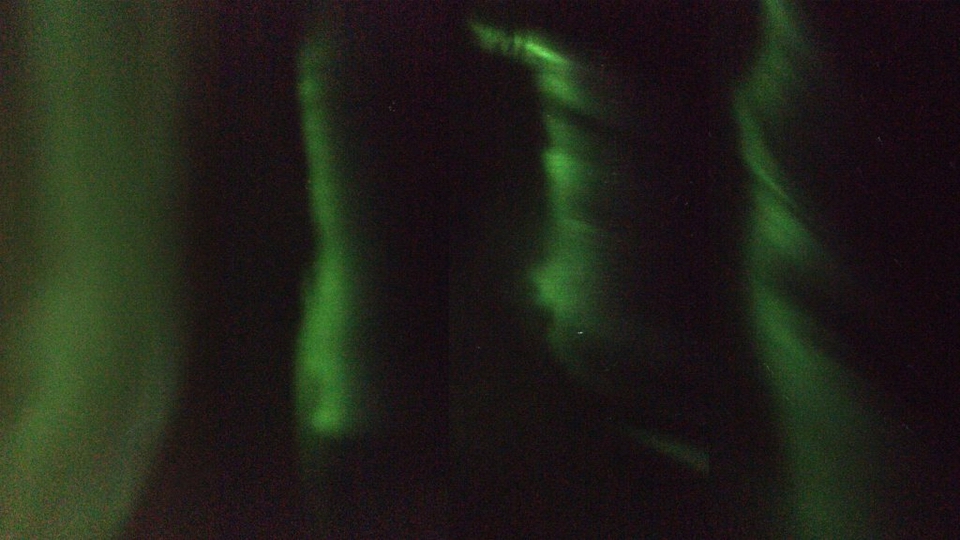
Question 1: What are the Northern Lights?
Answer 1: Northern lights (Aurora Borealis) are the sparkles that occur as a result of the collision of charged particles separated from the sun with gases in the atmosphere of the earth.
Question 2: What is the mechanism of formation of Northern Lights?
Answer 2: The charged particle (usually the electron), which hits a gas atom (Oxygen and Nitrogen) in the atmosphere, transmits its energy to the gas atom it strikes and excites the gas atom. An electron of the “excited” gas atom moves from the low-energy sub-orbit to the higher-energy upper orbit. These “excited”atoms have to “calm down” releasing their excess energy. The electron then moves back to a lower-energy orbit, releasing a particle of light or photon. These released photons are the source of the Northern Lights. This mechanism is exactly the same as the formation mechanism of the Neon Lights. In a sense, the Northern Lights are the Neon Lamps of Mother Nature.
Question 3: Why are the Northern Lights seen in places close to the poles?
Answer 3: The Earth's electromagnetic field (Magnetosphere) acts as a shield that pushes the coming charged particles. These charged particles hit the Earth's atmosphere only in areas close to the north and south poles where this magnetic field is weak. The radiation of the solar winds is very dangerous and would have caused the destruction of humanity if they had directly hit the Earth.
Question 4: Are there Southern Lights like the Northern Lights? If so, why don't I hear the term “Southern Lights” or the term of “Arctic Lights “to include in both poles?
Answer 4: There is also a southern equivalent (southern lights or aurora australis). Since the natural viewers of the south are not humans, but emperor penguins, the term of “polar lights”, which means both, is hardly used.
Question 5: If the source of the Northern Lights is the charged particles from the sun, why is it seen at night?
Answer 5: The world's invisible magnetic field (Magnetosphere) extends between a region close to the North Pole (not exact North Pole) and a region close to the South Pole. Its size and shape constantly change under the bombings of solar winds. When the solar storm reaches Earth, the Earth’s magnetic field deflects the solar storms and the field lines join together. This acts as a “funnel” for the gas particles to pour down on the daylight side of the pole. This is known as the daylight aurora. Once the magnetic field lines that came from the sun bend towards the night side of the pole, the lines couple together. This eventually leads to the field lines breaking like a “rubber band.” The gas from the solar storm then goes along the Earth’s magnetic field lines and goes towards the poles on the night side of the Earth, thus causing the night time aurora.
https://www.youtube.com/watch?v=1MI3YDGgtN4
Question 6: Does the Northern Lights look better when we go further north? Is it the North Pole where it looks best?
Answer 6: No! Most aurora occur within a band, known as the "auroral zone", which is typically 3° to 6° wide in latitude and 10° to 20° from the geomagnetic poles. At the magnetic poles, the Earth's magnetic field lines are almost vertical. The charged particles from the sun do not go along these vertical lines. This zone is the footprint of the boundary between the highly stretched, vertical magnetic field lines in the polar region and the more normal magnetic field lines at lower latitudes.
Question 7: Do the Northern Lights appear in the same latitudes in all countries?
Answer 7: No! The Aurora Borealis manifests itself in a huge ring above the Earth’s Geomagnetic North Pole which is referred to as the Auroral Oval. You might expect this oval to be visible from the same altitude around the globe but this is not the case. Because the center of the oval is the Geomagnetic North Pole not the geographical North Pole. In connection with this, the Earth's magnetic axis is not oriented precisely north-south; it is tilted towards Canada. The Auroral Oval reaches lower latitudes in North America than on the other side of the Planet. As a result, the Aurora Oval passes through the Canada at 60-65 north, while it passing through the Scandinavia at 67-71 north.
Question 8: What is the best time of the day to see the Northern Lights?
Answer 8: Magnetic Midnight is the best time of day to spot the Aurora lights.
The magnetic midnight is when the North or South Magnetic Pole is exactly between the sun and an observer on earth. Because of the magnetic pole of the Earth is not the same as the North pole (the angle between the earth's axis and the magnetic axis is about 11°), those two midnights are not at the same time. The magnetic midnight is about an hour before the 'normal' midnight. For example, magnetic midnight in Abisko is around 11.30 pm by local time (GMT+2). For aurora-hunters, the rule of thumb is simple; an hour either side of “magnetic midnight”. If you haven't seen any Aurora activity until 01:00, it's probably not going to happen that night. Even if some say “…but it is also possible to observe the Northern Lights also before and after this period. The fact that you never know for sure when or for how long the Northern Lights will appear makes them even more fascinating”, freezing after 01:00 in the middle nowhere is pointless, to my opinion.
https://www.visittromso.no/en/northern-lights-howtosee
Question 9: What is the best year to see the Northern Lights?
Answer 9: 2024 will be the best year in the next decade to watch the Northern Lights. The sun's energy output changes on a cycle roughly 11-year basis. This called as "solar cycle". The cycle is marked by the increase and decrease of sunspots. Sun spots are darker, cooler areas on the surface of the sun. Big solar storms called coronal mass ejections (CME) erupt from sunspots. The charged particles, transported by Coronal Mass Ejection, cause Aurora when reached Earth. (less sunspot = less charged particle = less Northern Lights) The greatest number of sunspots, in any given solar cycle, is designated as "solar maximum". The lowest number is "solar minimum." The most recent "solar minimum" occurred in December 2008 and the most recent "solar maximum" occurred in April 2014. Since April 2014 sunspots are decreasing. Forecasters expect the next “solar minimum” to arrive in 2019. After the end of 2019 sunspots will start to increase. “Solar maximum” is likely to occur in 2024 and if you are an aurora watcher, 2024 would be the best year to go hunting for them.
Question 10: What is the best time of year to see the Northern Lights?
Answer 10: The spring equinox. It's well known that the Northern Lights are stronger around the equinoxes for reasons not fully understood by scientists. According to some, because the Earth is inclined, there is a greater chance of a good connection between the solar wind and the Earth in equinoxes. Why are we going in the Spring Equinox not in the autumn equinox? Because you also want clear skies and autumn is quite cloudy, especially in Scandinavia. Cloud and indoor weather is the biggest enemy of the Northern Lights. Northern light is formed but you cannot see. Because it occurs much higher than the cloud. Winter and spring are usually less cloudy than the fall. Therefore, a trip between December and April makes sense.
https://www.space.com/32601-where-to-see-northern-lights.html
Question 11-Where should you go to see the Northern Lights?
Answer 11: It's usually imperative to head to northern latitudes between about 64° to 70° any time between September and April when there is plenty of darkness. That means heading to Alaska, northern Canada, Greenland, Iceland, Norway, Sweden, Finland or northern Russia. Let’s look at these places one by one: If you live in Europe, the easiest thing to do is head to the far northern parts of Norway, Sweden and Finland. Northern Norway, especially the area around Tromsø, is a popular destination. But we also know that the coastal strips of Scandinavia (Norway) are more cloudy, with inland (Sweden, Finland) more clear. Abisko (in Sweden) has developed a reputation for being the Number 1 aurora-watching destination on the planet due to the fact that it is located in a very special microclimate with less precipitation than any other location on Earth that is located within the auroral zone. What's the bad side? Abisko is a small village with 85 inhabitants and nothing else to do! Iceland is also a good choice; as long as you make sure to set aside enough time to compensate for cloudy skies (Island country is generally cloudier than Scandinavia). Russia is pretty much out. Although a part of the Auroral Zone lies in northern Russia, such areas lack tourism infrastructure and are relatively hard to get to.
There are also plenty of options for good aurora viewing in North America. But you should probably steer clear of far eastern Canada, which tends to be quite cloudy. Anywhere between James Bay and Alaska's west coast is a good place to go. (James Bay is the far southern part of Canada's huge Hudson Bay). In Alaska, anywhere from Fairbanks north offers good viewing. In Fairbanks itself, residents see the northern lights on about eight of every 10 nights.
https://www.space.com/32601-where-to-see-northern-lights.html
Question 12-What is the single best place to see the Northern Lights? Aurora Skystation or Torneträsk Lake?
Answer 12: Lonely Planet announced Abisko’s Aurora Skystation No:1 place to see northern lights. When I go to Abisko Aurora Skystation was closed due to repair work. But when I go there I realized that it can’t be the best place to experience the lights. The best place was the Torneträsk Lake itself (I consulted it with the locals). There are some “small” mistakes in the Lonely Planet’s article.
(https://www.lonelyplanet.com/travel-tips-and-articles/the-worlds-most-illuminating-experiences/40625c8c-8a11-5710-a052-1479d2767898)
If you are copying and pasting information written by others, sitting at a table thousands of kilometers away, you often mix real information with non-real ones. In order to reach the real information about such issues, it is necessary to reach the locals, to talk to locals or -at least- to make use of the sources (web page, book etc.) prepared by the locals. When I checked in Abisko Hostel I asked the guy at the reception (I was lucky to find him) “what is the best place to see the northern lights? Is it Aurora Skystation?” He replied “Actually not! When you look at from the Aurora Skystation the lights of Abisko reduce the visibility of the northern lights. You must go to the lake. You should walk as far as you can to the middle of the lake.” So did I...
Question 13: How is the light pollution and Aurora Borealis relationship?
Answer 13: It's best to avoid any light pollution to improve the brightness of Aurora Borealis. What are the main sources of light pollution?
1-Sunlight: Daytime sunshine suppresses the Northern Lights, so you can't see anything. So, the North Light is not seen in the summertime. Because in summer there are 24 hours of sunlight in these latitudes. You have the chance to see the northern lights until the second half of April.
2-Moon Light: The moon is "light pollution" when it comes to seeing the Northern Lights. You must avoid the full moon. New Moon phase is the best.
3-Light pollution caused by humans: When you are looking for northern lights you usually need to get out of town. The lights are usually not strong enough to overpower the light that shines from street lights, homes, lit up buildings, car headlights etc. For the best northern lights experience, you must move as far away from civilization as possible.
4-Snow: The white snow reflects the light from street lights, car headlights, moon etc. and “pollutes” the sky with light. The rural areas without snow on the ground are better (If you find...).
5-Stars: The Northern Lights are a faint light in the sky. The stars are in fact brighter and therefore you often see them through the lights. But, this is a light pollution you can't escape.
https://www.tripadvisor.in/ShowTopic-g189970-i594-k4813787-Northern_Lights_and_Full_Moon-Reykjavik_Capital_Region.html
Question 14: What are the Northern Lights Colors?
Answer 14: There are three main colors. Red, green and blue. Green is the most frequent color. When the charged particles come from the Sun collide with Oxygen atoms, at altitudes between 120 and 180 km, 557.7 nm emission (green) dominates. The green colored aurora occurs. At the highest altitudes (higher than 180 km), excited oxygen atoms emits at 630 nm (red). At lower altitudes (below 120 km), the nitrogen atoms emit a large number of wavelengths, of which 428 nm (blue) is predominant. In theory, practically any color may be possible because the red, green and blue are the primary colors of the additive colors.
Question 15: What are the most common types of aurora according to their appearance?
Answer 15:
The most common shape of aurora is arc. Arcs posses long graceful curves from horizon to horizon. They are seen in times of low solar activity.
Bands are similar to arcs, but posses more curves. Arcs can change into bands in mere minutes.
Rays appear as smaller filaments or streaks. They are most common in periods of high solar activity. They follow the Earth's magnetic field lines and tend to extend vertically.
Converging rays defined as corona. Coronas take the shape of a converging crown overhead and can contain a great variety of color, with purples, whites and blues. They are most common during periods of intense solar activity.
Diffuse (Veil) auroras are only seen on rare occasions (rarest). They do not take on a specific shape with any specific features. They cannot be seen easily with the naked eye, typically needing specialized equipment.
Glow is a wide uniform area of auroral lights, happens when there are aurora structures in progress but beyond the horizon or line of sight.
Patch. Isolated "cloud” of aurora.
Undefined. Does not identify with other forms. Some auroras simply don't clearly fit the conventional categories.
Arcs and bands can be rayed (with vertical ray structures) or striated (with lines of brighter and darker light). If they are uniform in shape and intensity, called as “homogeneous”.
In practice, most of these types are not discrete entities. Rather, they transition into each other (sometimes rapidly) and there are many intermediates. It is often the case that more than one form is present at a time.
https://www.offthemap.travel/news/types-northern-lights-infographic/
https://auroraiceland.uk/aurora-types/
Question 16: Has Aurora noise?
Answer 16: Auroras make weird noises. Witnesses say the sounds are comparable to radio static, like a faint crackling, light rustling, or hissing heard for a few minutes during a strong display. The weird sounds were long considered folklore. Finnish scientists have shown that they really happen, and now we know why. Aurora noise, similar to a hissing, or crackling noise, begins about 70 m (230 ft.) above the Earth's surface. The key is something called an inversion layer, a region of the atmosphere where the air temperature increases with altitude instead of experiencing the usual decrease. This inversion layer acts like a lid, trapping negative electrical charge in the region below it and positive charge in the air above. When a geomagnetic storm hits Earth, the lid breaks and the charge is released, creating the weird sounds.
https://news.nationalgeographic.com/2016/06/auroras-sounds-noises-explained-earth-space-astronomy/
Question 17: Does aurora move?
Answer 17: Yes. Though some of the auroras (mainly glows, veils and arcs) are Quiet (No appreciable variations in brightness, movement and shape) many of them do move. If the forms move position or change shape quickly, in the order of a few seconds; are called as a: 'Active'. This is subdivided as
al: folding of boundaries of bands
a2: rapid changes in lower borders of individual forms
a3: rapid horizontal movement of rays in either direction
a4: refers to the display as a whole, in which forms fade rather quickly while new, similar or different forms appear in other parts of the sky; usually seen in late stages of big displays.
If the brightness changes, often rhythmical, from a fraction of a second to a few minutes is called as p: 'Pulsing';
Subdivided as
p1: pulsating, uniform changes of brightness
P2: flaming, light surges rising upward, showing shapes as burning. This spectacular phenomenon is often seen near the peak of a big display. It looks rather like a wind blowing over a field of wheat.
p3: flickering, very rapid changes of brightness
p4: streaming, irregular horizontal variations of brightness in homogeneous forms.
If you're lucky enough, you can see the dancing aurora. Very fast moving active aurora. Folding, whirling... I was lucky enough!
Patrick Moore, The Observational Amateur Astronomer, 1995
Question 18: How to evaluate the brightness of Auroras?
Answer 18: Auroras have a wide range of brightness, usually rated from 0 to 4 on a logarithmic scale (the International Brightness Coefficient, or IBC) in which each number is 10 times brighter than the previous one.
Zero means sub visual, detected only with instruments.
One is comparable to the Milky Way; whitish with no discernible color.
Two is comparable to moonlit cirrus clouds; color is barely identifiable (usually yellow-green).
Three is like brightly lit cirrus or moonlit cumulus clouds; colors are evident.
Four is much brighter than three; may cast discernible shadows;
https://www.skyandtelescope.com/observing/celestial-objects-to-watch/an-aurora-watchers-guide/
Question 19: What is a Geomagnetic Storm?
Answer 19: A geomagnetic storm (commonly referred to as a solar storm) is a temporary disturbance of the Earth's magnetosphere caused by a solar wind shock wave and/or cloud of magnetic field that interacts with the Earth's magnetic field.
https://en.wikiyy.com/wiki/Geomagnetic_stormutm_source=chromeextension&utm_medium=wikipedia.org
Question 20: Is northern lights forecast possible?
Answer 20: Aurora forecast is possible for three days with some certainty and it shown with Kp-index. The K-index, and by extension the Planetary K-index, are used to characterize the magnitude of geomagnetic storms and is the most important thing to know about aurora watching. It is a scale of numbers between 0 – 9 known as the planetary index. The Kp numbers start at 0 and as the geomagnetic (aurora) strength increases, so too does the Kp number. So Kp 0 being a very weak or non-existent aurora, and as it moves towards 9, it goes to be a major geomagnetic storm with really awesome northern lights displays. When Kp index reach 5 level (Kp5) it called as “Geomagnetic Storm”. Geomagnetic storms are labelled G1 to G5 (G1 = Kp5, G2 = Kp6, G3 =Kp7, G4 =Kp8, G5 =Kp9)
http://www.aurora-service.eu/aurora-school/all-about-the-kp-index/
https://www.swpc.noaa.gov/products/planetary-k-index
Question 21: How do I find out the northern light Forecast?
Answer 21: There are some applications for Aurora Forecast for your mobile. I was using Iphone 7 and I downloaded three Aurora Forecast applications. Aurora Forecast (Aurora Fcst), My Aurora Forecast (Aurora) and Northern Lights Aurora Alerts (Aurora Alerts). Among them My Aurora Forecast is the best and I mostly used it.
Question 22: What about photographing Northern Lights?
Answer 22: About Northern Lights photography… The thing is: to see the Northern Lights and to photograph the Northern Lights are completely different matters. There are web pages describing the subtleties of the photographing the Northern Lights.
https://happyworld.is/northern-lights-photography-settings/
https://www.davemorrowphotography.com/2014/10/how-to-photograph-northern-lights.html
In these web pages; manual adjustment, turning off image stabilization, turning off flash, 1600 ISO settings, lowest f-number or f-2.8 aperture (f-stop), 20-second shutter speed, using a tripod, zooming out, zooming in on a star, pre-setting the focus during the day, remotely releasing the shutter etc. etc. is written. But it is really hard work. I never fully understood this stuff. You'll also need a quality SLR camera, such as a full-frame DSLR camera with a wide-angle (f / 2.8) lens. You can see the lights in the dark sky, but the glow is actually too weak to get caught by a low quality camera. In addition, these glows are moving, sometimes very fast. The recommended “long exposure” doesn’t work in fast moving lights. And even if you buy all the recommended gear, you'll probably never get magazine-quality photos because they need serious knowledge and experience. Also remember “recommended gear” is for “average people”. All of the stunning Aurora photos you see in magazines or on the Internet are taken by professional photographers equipped with the latest model cameras and accessories. As being not a photographer but a traveler, I don't carry heavy cameras.
Question 23: What about photographing Northern Lights with an Iphone (or another smartphone)
Answer 23: There are also web pages describing “How to Photograph the Northern Lights with an iPhone”.
https://www.tourradar.com/days-to-come/how-to-photograph-northern-lights/
But the instructions still hard to understand to me, so I downloaded an application to photograph Northern Lights. “Northern Lights Photo Taker”. I am pleased with the application. It is quite simple. All arrangements are done by the application. There are four options for you to decide. Weak, Moderate, Strong (which are pointing visibility of the lights) and Custom (which is unnecessary). It is preset to “Moderate” mode but you can change it. It is not necessary to decide how strong the Northern Lights by yourself. Just hold the phone to the sky and take a photograph. First take a photograph with a preset “Moderate” mode. Then try weak and strong options in order. Look which one is the best and go with it. I could see the light on the photograph with the “Moderate” mode only. I could see nothing with the “Weak” and “Strong” modes, so I continued with the “Moderate” mode.
Question 24: Is light pollution zero in Abisko?
Answer 24: No! Sarah Baxter from Lonely Planet wrote “light pollution is zero”. This is not true! Despite the fact that Abisko is a very small place, light pollution is not zero. Check this link out:
http://laplandauroraborealis.com/
“Kiruna Aurora Borealis” says “We will definitely NOT stop in Abisko village - as the satellite image shows there's lots of light!” and they show the satellite photo on their web page Abisko with a considerable amount of light pollution. Actually, when you look the photos taken from the Aurora Skystation’s location you can see the Northern Lights but at the same time you can see the light pollution coming from Abisko.
https://www.wildernessphotographs.com/photo/aurora-sky-station-over-abisko-sweden/
https://www.kirunalapland.se/en/see-do/aurora-sky-station-2/
There is no absolute darkness over Abisko!
Question 25: What is the “Blue Hole” of Abisko?
Answer 25: Sarah Baxter from Lonely Planet wrote “The surrounding mountains keep the skies almost always clear” This is partly true (except the “almost always” part).Yes; I experienced the famous “Blue Hole” over the Torneträsk Lake myself. The “Blue Hole” is a hole in the sky without any clouds (and there are a lot of clouds around). But only after evening! Although there was a heavy snowstorm at daytime, the clouds were cleared from over the Torneträsk Lake and retreated to the edge of the Lake in the evening. Like Anette Karlsson wrote “Even if it is cloudy, the people in Abisko talk about the “Blue Hole” that normally comes in the evening”.
https://hamangroup1.wordpress.com/2013/01/22/abisko-the-best-place-for-aurora-borealis/
So don’t demoralize yourself when you see cloudy, stormy, snowy weather at daytime. Just wait till dark. And the “Blue Hole” was over the Torneträsk Lake, not over Abisko itself. There were clouds over Abisko although they didn’t prevent me to see the Northern Lights.
 back to the last page
Web sitesinde yer alan herhangi bir içerik yazılı izin olmadan kopyalanamaz, değiştirilemez ve diğer basılı ve dijital alanlarda kullanılamaz.
© 2018 Hasan Kamil SUCU.Her hakkı saklıdır.